Narrator (head mode): This is difficult. I have been trained to take heart-talk and turn it into pragmatic discourse. Be precise.
Narrator (heart mode): I could try to explain Virgilio Sieni’s Satiri in words but, honestly, creating a narrative would not convey how this piece makes you feel. What you experience and what lingers in the memory is the physicality of the two dancers, the refrain of the live cello by Naomi Berrill and the visual impact of the mask of a satyr by Chiara Occhini. Together these elements create an ambience of mystery and beauty that reaches the hidden crevasses of my imagination and touches my heart.
(Head snorts)
Narrator (heart mode): Can we share our authentic selves without fear of judgment?
Narrator (head mode): I doubt it (snickers and walks off to get coffee).
Narrator (heart mode): I think Mufutau Yusuf manages to do just this in Impasse.
There is so much to feel here: the giant laundry bag that may be carrying material possessions or trauma; the defenceless, naked Black body; the blank backdrop that morphs into desert, then mountains; the relentless running; the 40 minutes without seeing the faces of the two dancers; the eerie soundscape. Impasse embraces a radical vulnerability and, for this, it will live on in my heart long after the performance ends.
(Head scratches head)
Narrator (head mode): I don’t think you effectively describe the piece. What I remember most is the physicality of the prolonged scene in which a naked Yusuf ripples his back muscles against a soundscape that suggests creaking or popping bones; the insinuations of pillage, plunder; the sound of galloping horses; the sinister whispering. Is there resolution in the end? Not exactly. But the second dancer Shafiki seems happy in his own body. I think he’s saying: Look at me, I’m beautiful and I know it.
Narrator (heart mode): I accept your comments, but I feel that, essentially, it’s the willingness to accept their vulnerability that powers the piece.
Narrator (head mode): Dances Like a Bomb might also be considered a commentary on vulnerability with its examination of ‘mature’ bodies, their fears and joys played out in a series of vignettes.
Narrator (heart mode): I have seen it before and I smugly think I know what to expect: a polished and often humorous illustration of mature bodies. However, the intimate setting of Clonmel’s STAC Chapel transforms my response. The proximity of the dancers, seeing their sweat and hearing their laboured breathing, makes you feel the vulnerability of ageing more intensely.
(Head rolls eyes)
Narrator (head mode): True. Nonetheless, the dancers’ perseverance and dignity ultimately make the piece a celebration of the body’s enduring beauty and strength. And you forgot to mention the technical challenges of mounting performances at STAC Chapel – luckily Junk Ensemble brought their own lighting and set (although what that set was for remains a mystery to me).
Narrator (heart mode): But it’s a beautiful and atmospheric space, maybe more suitable for more unconventional work that doesn’t require technical support.
(Head shrugs shoulders and wonders what performing without tech actually signifies)
Narrator (head mode): Let’s talk about what happens when you bring two artists from different backgrounds together, put them in a studio for 40 hours and ask them to present a showcase of their experience. I’m referring to German dance artist/choreographer Stephan Herwig and Tipperary-based visual artist Austin McQuinn.
Narrator (heart mode): I feel this is an experiment in trust and the magic of making art. I go and see their process, which starts with a scrawled visual prompt on paper by Stephan, overwritten and extended by Austin, who later introduces a black taffeta parallel representation upon which the two create a slow, sinuous movement dialogue. The outcome is an exquisite interrogation of space and tactility.
Narrator (head mode): Sounds weird. I’d need to see a video of this before making any comment.
Narrator (heart mode): I’m afraid I’ve only got the heartfelt memories. You’ll have to trust me.
(Head thinks about this)
Narrator (head mode): Why did Ian Garside ask for a cooler before his residency showing?
Narrator (heart mode): He eats an ice-cream during the performance of Extranjero. I think this is going to be a reflection on feeling like a foreigner when you live in Gran Canaria but it turns out to be a meditation on the Albert Camus novel The Stranger which gives it a much darker/deeper aspect.
Narrator (head mode): I love a good twist like that – you should have done your research. Garside is known for his background in classical theatre so Camus would be right up his alley.
(Heart makes ‘note to self’)
Narrator (head mode): I believe you have omitted a large part of the Festival. Masterclasses? Workshops?
Narrator (heart mode): These embody what the Festival strives to do: create a moment in time where diverse artists and community come together to share movement, have fun and learn with and from each other. It’s all interconnected because the participants – be they young Irish dancers, international choreographers or local residents – don’t just take classes; they meet at breakfast and for lunch, they come to the performances, they participate in roundtables, and they have dinner together.
Narrator (head mode): Bit gushy but I think that’s why you keep me around. You nearly missed the essence of the Festival.
EPILOGUE
Brief dialogue between Head and Heart
Heart: It’s impossible to describe everything without becoming pedantic.
Head: You could make a list.
Heart: The Festival is an organic creature, in which strands of our year-round programme emerge and overlap, cropping up in surprising places and blurring the lines between performance and participation, professional development and community engagement.
This year, there were artists from Ireland, Italy, Germany, France, Greece, Canada, the United States and the United Kingdom.
Head: Finally, a list!
Heart: The Festival team is from Ireland Switzerland, Brazil, Germany, Argentina and the United States.
Head: You’re getting the hang of this.
Heart: This wildly diverse group shared lunches and dinners, conversations and discussions, trips to charity shops, a lot of laughter and a few tears. Most importantly, we came together with open hearts, recognising and embracing our differences, to share our love of movement and dance.
Head: Sounds a bit corny to me. Did you fulfil the remit of the Arts Council’s Festivals Investment Scheme which provides our funding?
Heart: Trust me, when it feels this good, all remits are achieved.
Head nods, smiles, exits stage left. Heart wants to continue the conversation.
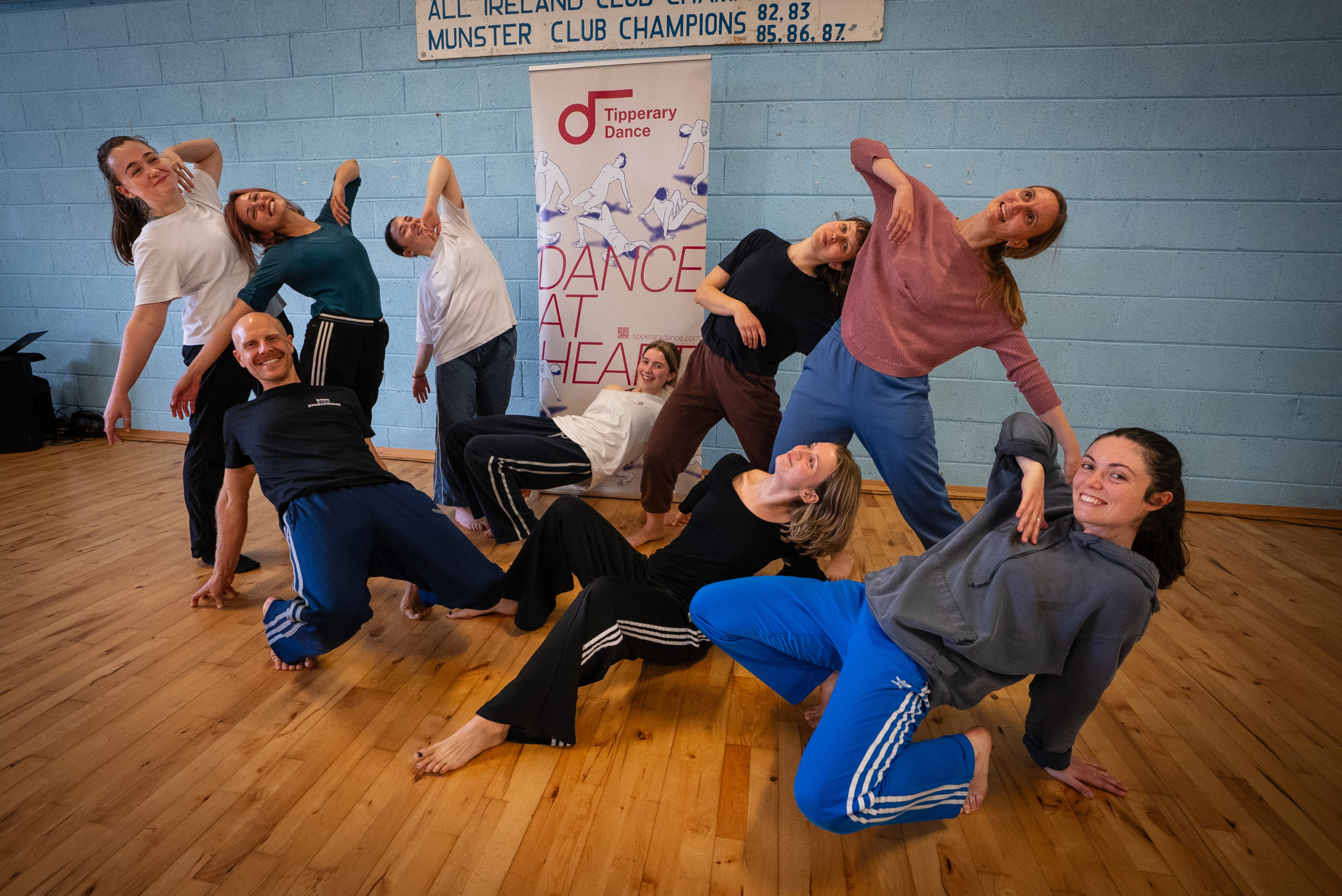
Photo by Caleb Barrett.